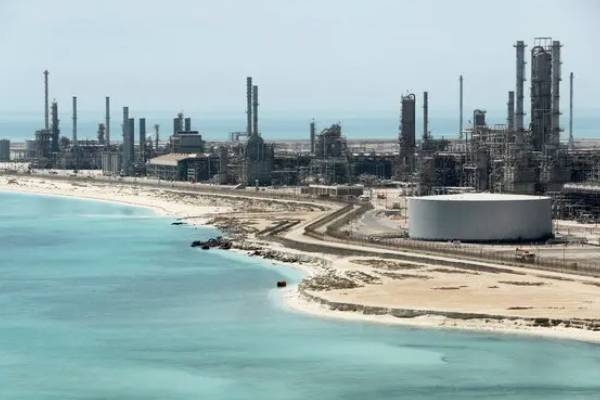
(Image source from: Reuters)
Saudi Arabia has begun to cut back on oil production because the crucial Strait of Hormuz is nearly blocked, causing storage tanks to fill up, as per a source who knows about the situation. This is happening while the country is trying to redirect some supplies via the Red Sea. These reductions by Saudi Arabia, which is the largest oil exporter in the world, follow similar steps taken by the United Arab Emirates, Kuwait, and Iraq. Some of these nations have been proactively lowering production to prevent their storage from becoming too full too quickly and to avoid completely stopping their output. The ongoing conflict in the Middle East has continued into its second week, effectively shutting down Hormuz to ships from the Persian Gulf, with mostly just Iranian supplies still passing through. This near halt in activity has caused export issues, pushing oil prices over $100 a barrel and potentially leading to higher global inflation. The state-owned Saudi Aramco did not provide any comments on the situation.
Saudi Arabia produces around 10 million barrels of oil each day and exports about 7 million barrels daily. Aramco has started to shift some shipments away from the typical Hormuz route to Yanbu in the Red Sea. However, the pipeline used for these shipments does not have enough capacity to completely replace the volume that was exported.
Earlier, JPMorgan Chase & Co. suggested that Saudi Arabia would run out of oil and fuel storage in more than two months from when the conflict began. According to Antoine Halff, who is a co-founder and chief analyst at geospatial analytics company Kayrros, the Arab producers around the Persian Gulf, which include Saudi Arabia, the UAE, Kuwait, and Iraq, have just over 100 million barrels of storage capacity left, or about a third of their total. But the actual usable level will likely be lower, and typically, operational use does not go beyond 80% of the listed capacity, he mentioned in a LinkedIn post last week.